
World Cup Lessons in Resilience: Playing to Win vs. Playing not to Lose
Argentina beat England 2-1 in the World Cup semifinal on Wednesday, and watching England's final thirty minutes sparked some old memories about the power of resilience under pressure, and about a night I faced almost the same test.
For context: Anthony Gordon put England up 1-0 in the 55th minute. Within five minutes, the players started pulling back, ceding territory to protect the lead. Coach Thomas Tuchel made defensive substitutions for the rest of the match. By the end, Argentina’s genius Lionel Messi had the two things he never should have gotten: space and time. England went from roughly 44% possession to 12%.
I know that pressure. I've had to defend a lead in the biggest game of my life, too.
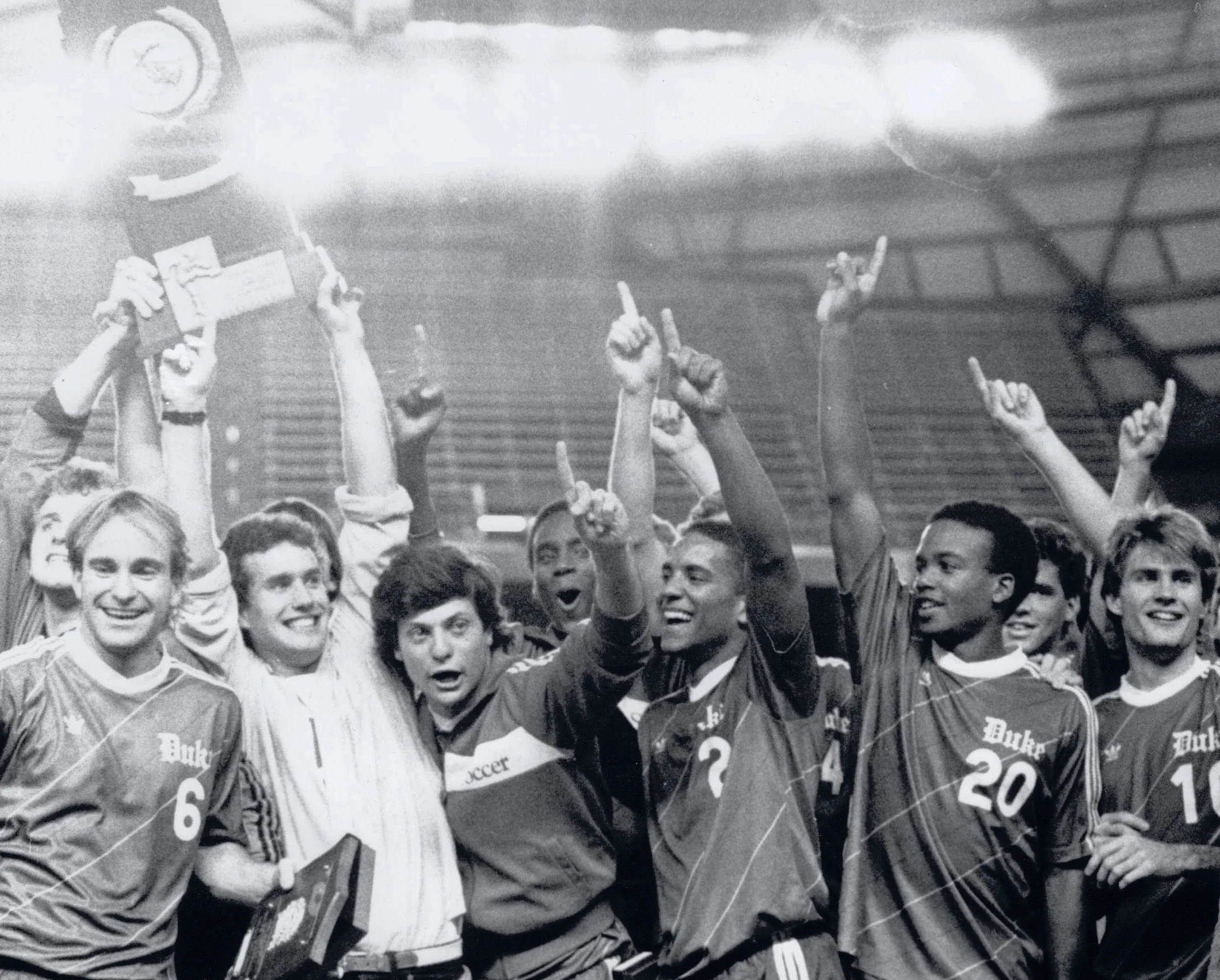
Lifting the NCAA National Championship Trophy. Duke Soccer National Champions
I've been there
I played midfield at Duke, and I was on the field for our NCAA championship final against Akron. My teammate Tom Stone scored in the 47th minute. We were up 1-0, with over 40 minutes left to defend.
We didn't retreat.
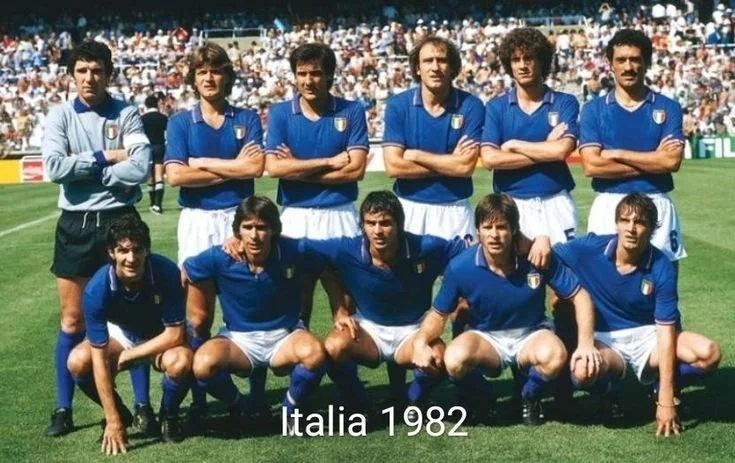
Pre-game, Italy World Cup Champions
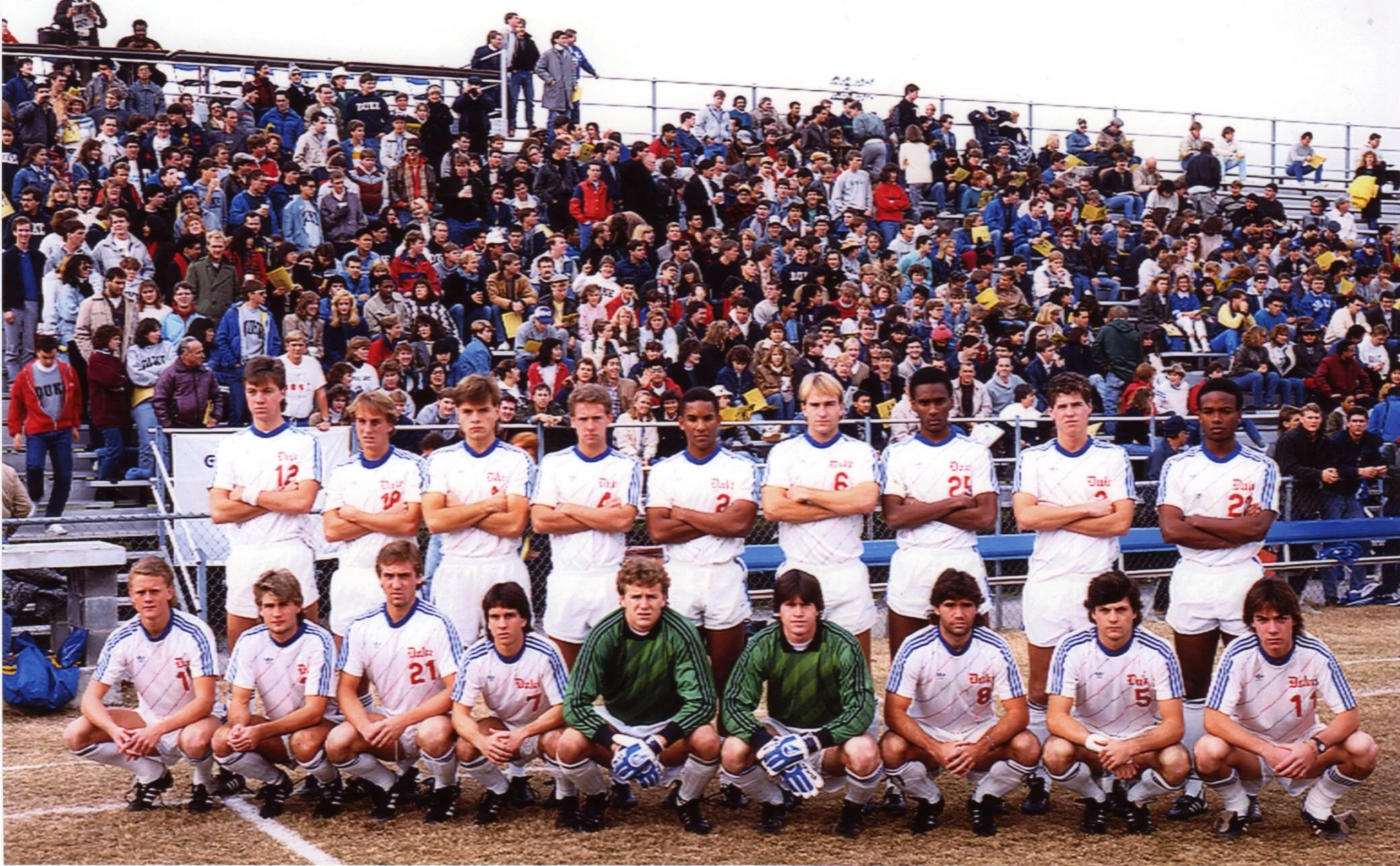
Pre-Game, Duke vs. Harvard, NCAA Semifinal
We were inspired by Italy's 1982 championship team, especially their game faces before kickoff, how organized they were, and their mastery of a tactic for holding a lead that we came to call "salting the game away."
Picture pouring salt into fertile soil: nothing grows there again. We took away what the other team wanted to do. Not by sitting back. By disrupting their rhythm, counterattacking, refusing to be provoked, controlling tempo. My coach's instruction to me before every game that tournament was simple: control the tempo. Not "defend." Not "attack." Control the tempo. That was the job.
I think that's the distinction that gets lost when a coach is criticized for a decision like Tuchel's this week. The real question isn't attack vs. defend. It's disruption vs. retreat. Retreat gives the other team exactly the conditions they're best at exploiting. Argentina had already survived two extra-time scares, against Cape Verde and Switzerland, and clawed back from two goals down against Egypt, to even reach this game. Retreating early was, in effect, an invitation to do it again.
Three things that made it work
None of them were tactical genius in the moment. All three were built beforehand.
Practice under pressure. At the end of our regular season, we'd have days where the locker room sign read bring flats, no ball — meaning we were about to run until there was nothing left. Then, more than once, we'd run drills afterward, on legs that had already given everything. We weren't training skill at that point. We were training what happens to decision-making and communication once fatigue sets in. We had such a strong team ethos that even teammates who weren't going to play that day did the fitness drills alongside us. By the end of a real game, no team we played was more physically or mentally fit in the final ten minutes. That gap wasn't talent. It was preparation for a specific kind of pressure.
No hierarchy under stress. In the last 90 seconds of that final, we had to defend three straight corner kicks. Everyone had an assignment, and we had to make sure nobody switched off. We yelled at each other, "Who's got number 10?!" "I got post!" "Get on your man!" , over and over, to fight through our exhausted brains. The star player got called out by the same voice as the newest guy on the roster, and nobody thought twice about it. We survived all three corners, and when the last one was cleared, there were 10 seconds left. Game over. We were NCAA Champions.
Disrupt not defend. This is the distinction that matters most, and it's easy to miss if you're only watching the highlights. Defending can shift into being reactive and passive. Absorb whatever comes, clear the lines, wait for the next attack. Disrupting is active. Take away their favorite passing angles, keep the ball to starve the other team, and yes, waste time. A resilient disruptive system is adaptive. What works for one opponent isn't automatically right for the next one. For example, England's defend approach on Sunday had worked earlier in the tournament, against Mexico. But It wasn't built for Argentina, a team that thrives exactly when it's handed space, time, and a deep block to pick apart.
Why “playing not to lose” can happen
Kahneman and Tversky, in Thinking, Fast and Slow, gave us the term for what can happen under pressure like this: loss aversion. In soccer terms, a team starts playing not to lose, instead of playing to win. The threat of a possible loss feels bigger than the value of a possible win, even when the odds are the same. It's a different psychology, and it produces different decisions — and it's hard to reverse once you're already inside it.
Not everyone responds to that pressure the same way, either. Give the responsibility of protecting a lead to the wrong person, or the wrong system, and the fear of losing can quietly reshape an entire team's behavior — even when nobody says a word about being scared. This becomes an organizational question as much as a psychological one: do you know, ahead of time, who on your team plays not to lose when the pressure shifts? Have you ever tested that in a low-stakes version of the moment, before it mattered?
The leadership question
The harder question for any of us leading under pressure isn't whether to attack or defend, disrupt or retreat. The beautiful — and maddening — thing about leadership is that there are rarely clean choices. The margins are small, people are complex, and the context is always shifting.
So the question is this: do your team's resilience principles focus on playing to win, or on playing not to lose? And are you practicing them in advance, or hoping to rise to the occasion when the real pressure finally arrives?
There's a lot more in this World Cup relevant to leadership in a complex world, and I'll be going deeper into it in a series of pieces over the coming weeks — including a conversation with Leigh Morgan of The Space in Between, where two former college athletes talk about how to stay in the game when things get hard.